
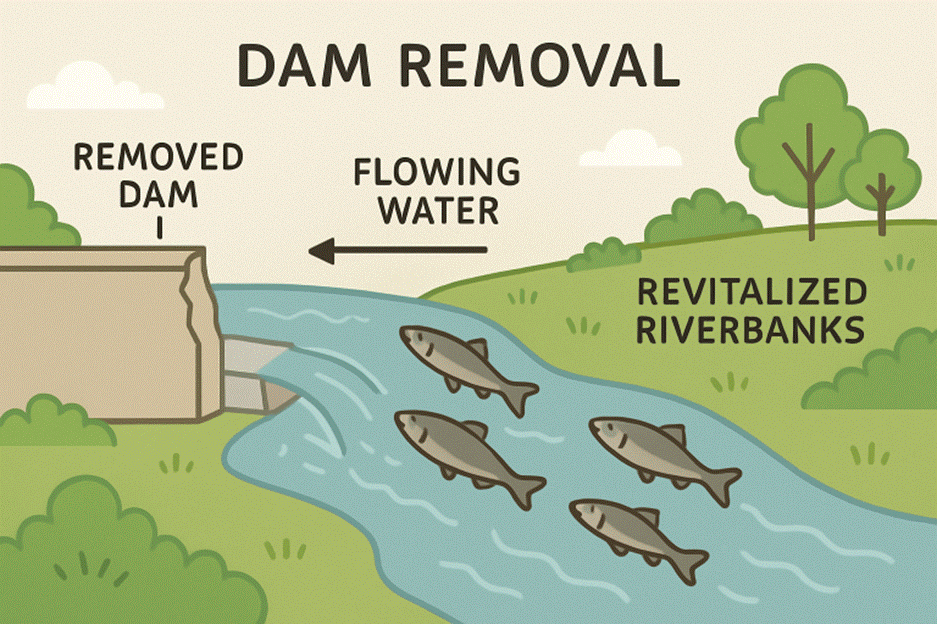
Throughout the United States, momentum is building behind the targeted removal of outdated dams and barriers, a process often referred to as dam demolition. This crucial shift is not only helping restore natural water flows and revitalize ecosystems. Still, it is also shaping a more resilient and sustainable future for communities that have long been impacted by outdated infrastructure. Dam demolitions provide a path for rivers to return to their natural courses, improving safety and supporting regional economies in unexpected ways.
Thousands of dams across America have outlived their intended purpose, posing risks to both local environments and nearby populations. Demolishing these structures is proving to be an effective strategy for supporting community resilience, enhancing water quality, and encouraging the return of wildlife that relies on unrestricted waterways. With increasing federal investments and growing public engagement, dam demolition is becoming a pivotal element of waterway restoration policy and practice. As these projects multiply, they offer a window into how collaborative planning can generate both short-term and lasting positive impacts for people and nature.
The drive to reconnect rivers and unleash ecological potential is gathering speed, bringing together government agencies, conservation leaders, and local stakeholders. For example, as interest in recreational opportunities and natural resources grows, more communities are seeking the benefits of returning rivers to free-flowing conditions. The evolving techniques and technologies of dam demolition are setting new standards in environmental stewardship and infrastructure management.
Perhaps most importantly, dam demolition projects are showing that balancing ecological restoration with economic revitalization is possible. Where dams have come down, there are measurable improvements in fish populations, water quality, outdoor recreation, and even tourism. These wins speak to the power of dam demolition as a catalyst for positive change, not just for wildlife but for entire communities. For more details about the breadth of these projects and their impact, the Nature Conservancy offers a helpful perspective on restoring rivers through dam removal.
Rising Trend of Dam Demolition
There has been a marked acceleration in dam removal projects in the United States over the last decade. Many of these structures are no longer needed for their original purposes, while others have become safety hazards and obstacles to environmental recovery. For example, the Shulls Mill Dam removal on North Carolina’s Watauga River freed up nearly 80 miles of waterway for recreation and wildlife movement. Federal infrastructure funding is helping scale similar projects nationwide, with transformative impacts on river ecosystems and local recreation.
Ecological Benefits of Dam Removal
Dramatic rebounds frequently follow Dam demolition in river health. One key success story is the Klamath River on the West Coast, where the removal of four hydroelectric dams reopened more than 400 miles of river to migrating Chinook salmon. Within a year, salmon returned to historical spawning areas upstream, demonstrating how quickly species can bounce back once barriers are removed. These projects are vital for restoring sediment flow, natural habitat, and plant biodiversity, which supports healthier riverbank forests and greater resiliency against floods and droughts. According to the New York Times, the Klamath project is now regarded as a blueprint for similar efforts across the country.
Economic Impacts and Community Involvement
The removal of dams does more than restore natural beauty and ecological systems. It frequently delivers tangible economic benefits. Removing Monongahela River Locks and Dam 3 near Elizabeth, Pennsylvania, for example, is expected to bring $200 million in annual benefits from increased navigation efficiency and reduced maintenance costs. These projects can also lead to new recreational opportunities, attracting anglers, paddlers, and tourists, helping boost local economies and create new jobs. What makes dam removal particularly promising is the strong role of community participation and the willingness of diverse stakeholders to unite behind shared goals.
See also: business development index numbers
Challenges in Dam Demolition Projects
Despite notable successes, dam removal projects often encounter complex challenges. Securing consistent and adequate funding is a critical hurdle, as many projects depend on federal grants and state support. Another significant barrier is the regulatory process, as dam removal must comply with a web of environmental, safety, and public health requirements. Additionally, community apprehension can arise around issues such as property values, sediment management, or changes in local water levels. Organizations like The Nature Conservancy are addressing these challenges through practitioner workshops and public education to build capacity and foster informed local participation. Through careful planning and transparent communication, project teams are learning to navigate opposition and technical hurdles to maximize both social and environmental benefits.
Case Studies of Successful Dam Removals
The Elwha River in Washington State provides one of the most comprehensive examples of successful dam demolition. Completed in 2014, the project restored a salmon migration path that had been blocked for nearly a century. Not only did native fish populations return, but riverbanks revegetated, and sediment once trapped behind the dam helped rebuild lost coastal beaches. Another impactful project is the Penobscot River restoration in Maine, which dramatically increased the abundance of sea-run fish and enhanced outdoor recreation opportunities. These success stories serve as models, inspiring additional efforts and demonstrating the immense, multi-benefit potential of dam demolition.
Future Prospects and Innovations
Looking forward, the future of dam demolition looks promising with increased policy support and innovation in both demolition technology and ecological restoration techniques. Advances in engineering, such as precision blasting and sediment management, are making projects more efficient and less disruptive to surrounding habitats. Public support remains strong, as citizens and legislators alike recognize the value of free-flowing rivers for both nature and local economies. Continued collaboration among scientists, engineers, community leaders, and policymakers will be necessary to overcome future obstacles and unlock the full potential of waterway restoration.
Dam demolition stands at the intersection of environmental restoration, public safety, and economic revitalization. The patterns of success and the lessons learned from hundreds of projects across the country are shaping a stronger, healthier, and more connected future for both people and wildlife.