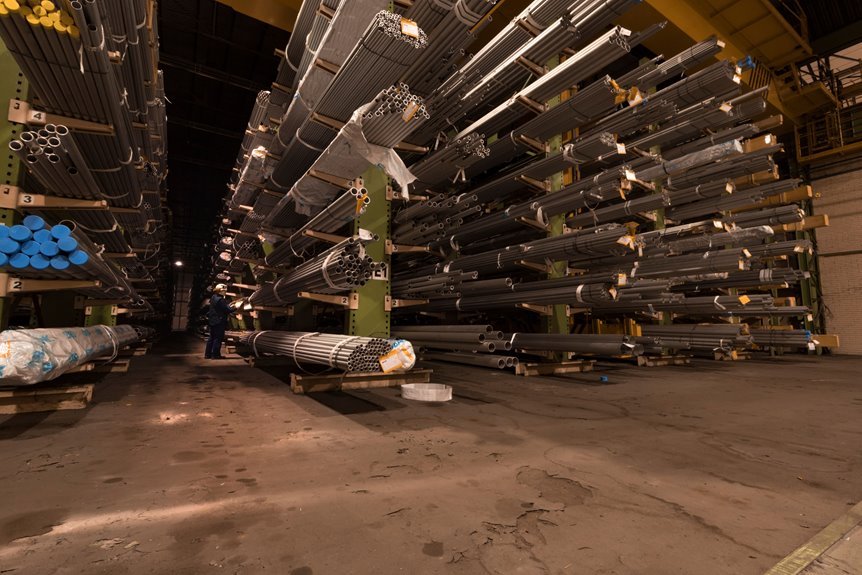

Warehouse material flow connects receiving, storage, picking, packing, and shipping into a continuous, data-driven system. It hinges on defined sequences, timing, and critical handoffs, with real-time monitoring of throughput, cycle time, and queues to expose bottlenecks. Standardized processes, disciplined housekeeping, and consistent coding support reliability. Metrics, governance, and continuous improvement drive accountability and target alignment, while dashboards reveal gaps and opportunities for optimization—prompting operators to act on insights and keep the system moving.
What Is Warehouse Material Flow and Why It Matters
Warehouse material flow defines the sequence and timing of all movements, from receiving to storage, picking, packing, and outbound shipping. It presents a conceptual overview grounded in data, metrics, and process steps. Understanding this flow supports strategic alignment across operations, logistics, and performance targets. Clear measurement points enable optimization, accountability, and freedom to reallocate resources where value is highest.
Mapping a Product’s Journey From Receiving to Dispatch
Mapping a product’s journey from receiving to dispatch involves tracing each discrete movement and decision point to ensure timely, accurate handling. The analysis emphasizes measurable steps, standardized handoffs, and visible queues, supporting proactive orchestration. Data-driven metrics quantify throughput, cycle time, and accuracy, informing continuous improvement. The mapping journey highlights product flow, enabling freedom-seeking teams to optimize without unnecessary constraints.
Detecting and Alleviating Bottlenecks in Real Time
Real-time bottleneck detection relies on continuous monitoring of throughput, cycle time, and queue lengths to identify deviations from expected performance. Detection latency informs prioritization, while root-cause analysis aligns actions with flow goals.
Real time dashboards present drift metrics, capacity gaps, and queue status, enabling disciplined interventions, measured improvements, and freedom to optimize processes without sacrificing reliability.
Choosing Systems, Coding, and Housekeeping for Smooth Flow
A disciplined selection of systems, standardized coding practices, and rigorous housekeeping underpin predictable material flow. The analysis compares options for choosing systems and coding schemes, linking configuration choices to error rates, cycle times, and throughput. Housekeeping for smooth flow supports consistent data, traceability, and audit readiness, while aligning with warehouse material performance targets.
Freedom-aware teams optimize with measurable, repeatable processes and disciplined governance.
Metrics, Best Practices, and Continuous Improvement
Metrics, best practices, and continuous improvement anchor warehouse material flow in measurable performance. Data-driven benchmarks guide metrics alignment across receiving, storage, and shipping, enabling transparent comparisons and targeted shifts. Standardized processes reduce variation, while continuous feedback cycles sustain optimization. Clear escalation paths, frequent audits, and disciplined change management promote momentum without sacrificing freedom for innovative solutions.
Frequently Asked Questions
How Does Cross-Docking Impact Overall Flow Efficiency?
Cross docking improves flow efficiency by reducing handling stages and dwell time, yet it can introduce flow bottlenecks if inbound variability isn’t matched to outbound capacity. Metrics show cross docking efficiency rises with synchronized scheduling and real-time velocity data.
What Role Do Human Factors Play in Material Movement?
Human factors shape material movement by influencing task timing, error rates, and safety compliance; metrics quantify stress, fatigue, and training efficacy, guiding data-driven improvements, process optimization, and freedom-oriented workflows that empower workers while sustaining throughput and quality.
Can AI Predict Demand Shifts Affecting Warehouse Flow?
Yes, AI demand shifts can predict movements; ironically, warehouses trust data more than intuition. The analysis measures signals, forecasts episodes, and quantifies risk, guiding adjustments in inventory, space, and throughput—enhancing warehouse flow and decision-making via AI demand shifts.
How Should Safety Audits Influence Process Design Choices?
Safety audits influence process design by highlighting control gaps; compliance mapping guides standardized procedures, while risk assessment quantifies impact. The data-driven approach measures bottlenecks, enabling metrics-focused refinements that sustain freedom through safer, more resilient warehouse material flow.
What Are Hidden Costs of Poor Flow Beyond Metrics?
A statistic shows 70% of inefficiencies originate in hidden costs. Hidden costs arise when flow visibility is limited, driving downstream delays and rework. It remains data-driven: metrics reveal optimization potential, enabling process freedom via measurable, continuous improvement.
Conclusion
In sum, warehouse material flow hinges on a synchronized sequence of receiving, storing, picking, packing, and shipping, guided by real-time visibility and disciplined housekeeping. By mapping each handoff, monitoring throughput, and swiftly escalating variances, operations stay aligned with targets. The data-driven cadence—KPIs, cycle times, queues—exposes bottlenecks and triggers continuous improvement. Like a well-tuned engine, standardized coding and governance keep the system reliable, constant, and ready to scale as demand evolves.