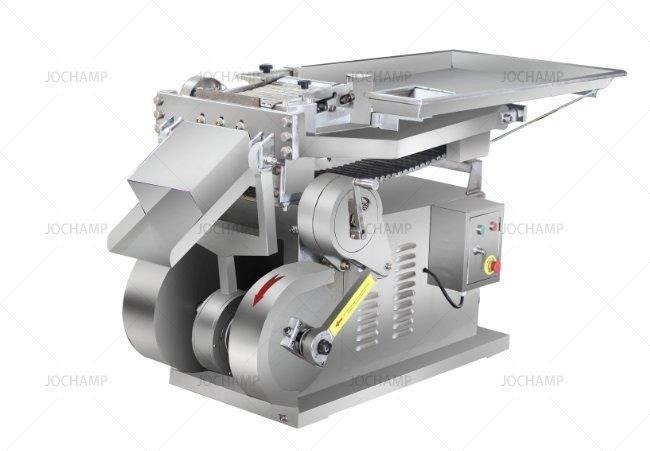

Every strand of cut tobacco began as a whole leaf. Between the field and the finished pack, the leaf is cured, conditioned, cut and blended, and the cutting stage is where its final character takes shape. A tobacco cutting machine turns prepared leaf into the fine, even strands that pack neatly, burn steadily and draw smoothly. Understanding how it works helps you get the best from it.
Preparing the Leaf
Cutting starts long before the leaf reaches the blades. After curing, tobacco leaf is usually dry and brittle, far too fragile to cut cleanly. It is first conditioned, which means bringing it to a workable moisture level with gentle steam or a fine water mist. Properly conditioned leaf is pliable and supple, so the blades slice it rather than shatter it.
The leaf is then loosened and sorted. Stems and damaged pieces are removed, and the leaf is fed in an even layer so the cutter receives a steady supply. An uneven feed is one of the most common causes of an uneven cut, so this preparation step deserves real attention.
Feeding the Cutter
Inside a tobacco cutting machine, feed rollers grip the conditioned leaf and carry it forward at a controlled speed. The speed of the feed relative to the cutter sets the width of the cut: a faster feed produces wider strands, a slower feed produces finer ones. Operators adjust this ratio to suit the blend they are making.
Good feeding is steady feeding. If the leaf enters in clumps, the cutter produces thick and thin patches in the same batch. Modern machines use even feed systems and adjustable pressure rollers to keep the flow constant, which is why they can hold a consistent cut width hour after hour.
The Cutting Action
The heart of the machine is the cutter head. In a rotary tobacco cutting machine, a drum fitted with sharp blades spins against a fixed knife, slicing the leaf as it passes through. In a reciprocating machine, a straight blade moves up and down, cutting the leaf in clean strokes. Both designs rely on the same principle: a sharp edge meeting well-conditioned leaf at a steady rate.
Blade sharpness is everything. A sharp blade slices cleanly, leaving smooth strands with intact edges. A dull blade crushes and tears the leaf, producing dust and short fragments that spoil the blend. That is why sharpening is not an occasional chore but a routine part of running the machine.
After the Cut
Once cut, the tobacco falls onto a conveyor or into a collection bin. At this point it is usually dried slightly to bring it to its final moisture level, then passed through a sieve or air separator that removes dust and very short pieces. The remaining strands are ready for blending, flavouring if required, and packing.
Quality checks happen throughout on the tobacco cutting machine. Operators look at the strands for evenness, feel them for moisture and watch for signs of crushing. Small adjustments to feed speed, moisture or blade pressure correct most problems before they affect a full batch.
5 Stages of the Cutting Process
- Conditioning: bringing the cured leaf to a pliable, workable moisture level.
- Sorting and loosening: removing stems and damaged leaf, and forming an even layer.
- Feeding: carrying the leaf into the cutter at a steady, controlled speed.
- Cutting: slicing the leaf with sharp blades at the chosen width.
- Separation and drying: removing dust and short pieces, and setting the final moisture.
Common Problems and What Causes Them
Uneven strands usually come from an unsteady feed or from leaf at mixed moisture levels. Dust and short fragments point to dull blades or leaf that is too dry. Strands that clump together often mean the leaf is too moist. Each of these faults has a straightforward cause, and a trained operator learns to read the cut from a tobacco cutting machine and adjust accordingly.
Regular maintenance prevents most trouble. Keep the blades sharp, the feed rollers clean and the guides free of built-up residue. A machine that is cleaned on schedule runs more evenly and lasts longer.
Getting the Moisture Right
Moisture is the quiet variable behind every good cut. Leaf that is too dry shatters under the blade, while leaf that is too wet clumps and sticks to the rollers. The ideal range feels supple and cool to the touch, bending without cracking. A tobacco cutting machine can only do its best work when the leaf arrives in that condition, so check moisture before cutting, not after.
Many workshops use a simple moisture meter to check each batch. It takes seconds and removes the guesswork. If a batch is off, adjust the conditioning and wait rather than forcing dry or damp leaf through the cutter.
See also: Advanced imaging tech: revolutionizing security and efficiency
Frequently Asked Questions
Why must tobacco be conditioned before cutting?
Dry leaf shatters under the blade, producing dust instead of strands. Conditioning makes the leaf pliable, so it cuts cleanly and evenly.
What sets the width of the cut?
The ratio between feed speed and cutter speed. Operators adjust this to produce the fine, medium or wide cut their blend requires.
How do I know the blades need sharpening?
The cut tells you. More dust, torn strands and a ragged edge on the tobacco all point to blades that have lost their edge.
Final Thoughts
A tobacco cutting machine is a straightforward tool when it is understood and cared for: condition the leaf, feed it evenly, keep the blades sharp and check the cut as you go. Each stage supports the next, and together they turn whole leaf into the even, reliable strands that make a good blend. Master the process, and the machine will reward you with consistent quality batch after batch.