
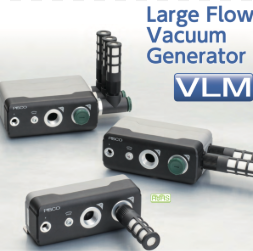

In industrial automation and manufacturing, vacuum technology plays a crucial role in enabling efficient handling, processing, and production. Among the various vacuum generation methods available, vacuum ejectors stand out for their simplicity, reliability, and rapid response.
Unlike traditional vacuum pumps, vacuum ejectors use compressed air or fluid dynamics to generate vacuum without mechanical moving parts, making them ideal for fast-paced and maintenance-sensitive environments.
What Are Vacuum Ejectors?
Vacuum ejectors are devices that generate vacuum using the Venturi effect, where a high-speed fluid flow creates a low-pressure area that draws in surrounding air.
Compressed air or steam is forced through a nozzle, accelerating and reducing pressure, which creates suction at the vacuum port.
Because they do not rely on moving components, vacuum ejectors are highly durable and require minimal maintenance.
Key Advantages of Vacuum Ejectors
Compact and Lightweight Design
One of the major benefits of vacuum ejectors is their compact size. Compared to mechanical vacuum pumps, they are smaller and easier to integrate into machines and automated systems.
No Moving Parts
Vacuum ejectors operate without mechanical components, which reduces wear and tear and eliminates the need for frequent maintenance.
Fast Vacuum Generation
These systems can generate vacuum almost instantly, making them ideal for applications requiring rapid response, such as pick-and-place operations.
Flexible Installation
Due to their simple structure, vacuum ejectors can be installed directly at the point of use, improving system efficiency and reducing energy loss.
Types of Vacuum Ejectors
There are several types of vacuum ejectors, each designed for specific applications.
Basic ejectors provide simple vacuum generation without additional control features and are often used for handling airtight objects.
Compact ejectors integrate valves and control systems, making them suitable for automated environments.
Multistage ejectors combine multiple nozzles to increase suction performance while optimizing air consumption.
Industrial Applications
Vacuum ejectors are widely used across various industries due to their adaptability and efficiency.
In manufacturing, they are commonly used for robotic pick-and-place systems, where quick and reliable vacuum generation is essential.
In packaging, vacuum ejectors help handle cartons, films, and products with precision and speed.
They are also used in printing systems for paper handling, ensuring smooth feeding and reducing operational errors.
In addition, vacuum ejectors are applied in laboratory, medical, and environmental systems where suction and fluid handling are required.
Vacuum Ejectors vs Vacuum Pumps
While both technologies generate vacuum, vacuum ejectors differ significantly from vacuum pumps.
Vacuum ejectors are simpler, more compact, and easier to install, making them ideal for localized vacuum applications.
However, vacuum pumps are better suited for applications requiring continuous and stable vacuum levels.
Choosing between the two depends on factors such as energy efficiency, required vacuum level, and application complexity.
Conclusion
Vacuum ejectors provide a reliable and efficient solution for vacuum generation in modern industrial systems. Their simplicity, fast response, and low maintenance requirements make them a preferred choice for many automation applications.
As industries continue to adopt advanced automation technologies, vacuum ejectors will remain a key component in achieving efficient and flexible production processes.