
Understanding portrait posing starts with intent: to reveal character and authentic expression while presenting the subject naturally. It emphasizes aligning body lines with gaze and balance to guide the viewer’s eye, and using angles and weight to create depth. Subtle micro-gestures convey mood without overt posing. A practical workflow—brief, pose, shoot, review—keeps momentum and consistency in lighting and color. The result is a confident, cohesive portrait, but there are details that challenge first impressions and merit closer look.
What Portrait Posing Aims to Achieve
Portrait posing aims to capture the subject’s character and intention while presenting them in a flattering, natural way. The purpose is to reveal authentic expression through deliberate framing, posture, and light.
Pose goals guide dialogue between subject and photographer, ensuring purposeful direction.
Aesthetic alignment aligns mood with visual cues, creating cohesive, calm portraits that reflect freedom and personal truth.
Aligning Body Lines With Gaze and Balance
Aligning body lines with gaze and balance involves directing the subject’s posture so lines run through the frame in a way that complements where the subject looks. This requires clear alignment direction, intentional gaze alignment, and mindful weight distribution.
Focus on body lines and micro gestures, ensuring facial cues reinforce stance, posture, and confidence without contrived stiffness for authentic portraits.
Angles and Weight Distribution for Flattering Depth
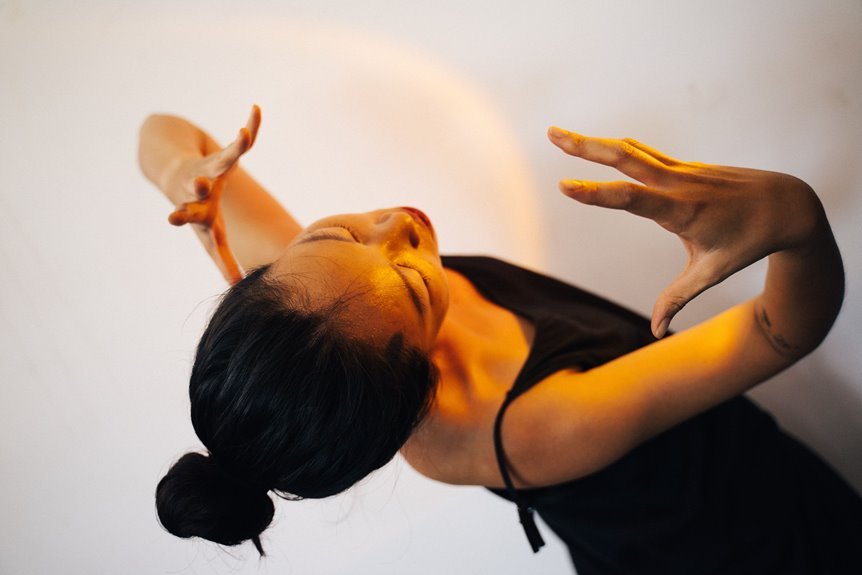
Angles and weight distribution are essential for creating flattering depth in a portrait. The subject’s torso and shoulders are angled to create separation from the background, while hips and chin align to maintain balance. Use subtle shifts to control depth and shading, guiding the viewer’s eye.angles and weight, depth and shading. This approach fosters clarity and freedom in posing decisions.
Expressive Posing: Micro-Gestures and Facial Cues
Micro-gestures and facial cues are the keys to conveying emotion without overt posing. Expressive posing relies on subtle movements, not forced angles, to narrate mood. Micro gestures capture intent; tiny shifts in gaze, tilt, or brow height communicate nuance. Facial cues guide storytelling, enabling nonverbal storytelling that fits authentic persona while preserving freedom and natural spontaneity.
Expressive posing emerges through deliberate restraint and observation.
Quick, Practical Workflows for Real-World Sessions
In real-world sessions, photographers leverage quick, repeatable workflows to maximize efficiency without sacrificing image quality.
A detached framework guides setup: pre-brief, pose, shoot, and review in tight loops.
Lighting modifiers streamline control, while consistent color palettes unify mood.
Quick checks for background, exposure, and compression prevent re-runs, preserving momentum and freedom to adapt as ideas evolve.
Frequently Asked Questions
How Do Posing Choices Reflect Client Personality and Mood?
Posing choices reflect client personality and mood by aligning posture, facial expression, and line work with desired narrative; posing psychology informs adjustments, while mood reflection guides dynamics, tension, and openness, enabling authentic, expressive imagery within a freedom-oriented, instructional framework.
What Are Common Mistakes in Posing Different Face Shapes?
67% of shoots show misaligned lighting; common mistakes in posing face shapes include underestimating angles, flattening profiles, and ignoring chin emphasis. In limited studio space, accommodate extreme body types with simple, flattering crops and subtle head turns.
How Can Posing Adapt to Limited Studio Space?
In limited studio space, posing becomes limitation aware posing and focuses on space efficient compositions. The subject is framed closer, angles optimized, and interactions simplified to maintain balance, rhythm, and expressiveness within tight boundaries for a freer creative outcome.
Which Poses Suit Extreme Body Types or Heights?
Pose suggestions lean toward elongated lines and strategic angles; tall silhouettes favor verticals, shorter frames benefit diagonals, and varied heights require layered poses. Body type tailoring guides spacing, lighting, and posing offsets for inclusive, freedom-centered results.
How to Build Rapport to Ease Natural Expressions Quickly?
Building rapport quickly eases expressions; the photographer adapts pose vs mood to match client personality, guiding conversations, setting comfort, and offering simple prompts that invite natural reactions while maintaining professional clarity and creative freedom.
Conclusion
In portrait posing, the photographer’s aim is authenticity: to reveal character through natural posture, subtle micro-gestures, and thoughtful lighting. By aligning body lines with gaze, managing weight distribution for depth, and using angles to flatter without stiffness, the result feels effortless rather than staged. A concise workflow—brief, pose, shoot, review—keeps momentum. Some may worry about overfitting models; in truth, consistency and feedback refine confidence, ensuring each session yields expressive, believable portraits that resonate with viewers.