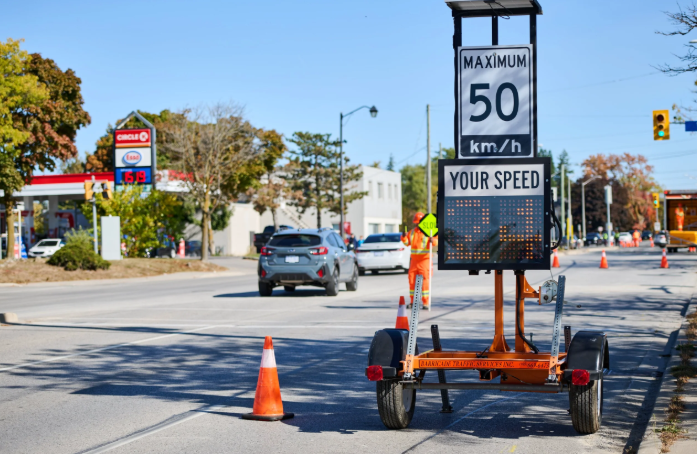

Managing vehicle speed is an important part of creating safer roads and reducing traffic-related risks. Traditional road signs communicate speed limits, but they do not always show drivers whether they are following those limits. A modern radar speed sign with driver feedback provides real-time vehicle speed information and visual warnings, helping motorists become more aware of their driving behavior. These electronic systems are useful for traffic authorities, road contractors, and communities looking to improve speed awareness in high-risk areas.
How Does a Radar Speed Sign Work?
A radar speed sign uses radar technology to detect the speed of approaching vehicles. The system measures vehicle movement and displays the calculated speed on a digital LED screen.
The featured Sinowatcher model uses 24.125 GHz Doppler radar technology. Its standard detection distance is 100 meters, with optional configurations supporting 150 or 200 meters. This allows drivers to receive speed information before reaching the sign’s immediate location.
When a vehicle approaches, the display shows its current speed. Depending on the configured speed threshold, the system can also provide visual feedback to encourage safer driving.
Important Features of Modern Radar Speed Signs
1. Dual-Color LED Display
Visibility is essential for effective traffic communication. Modern radar speed signs use bright LED displays to make speed readings easier to recognize during daytime and nighttime conditions.
The Sinowatcher model features red and green LED display colors. Vehicles traveling within the configured speed limit receive green feedback, while vehicles exceeding the threshold trigger red warning feedback and an alert symbol.
2. Accurate Radar Detection
Reliable speed measurement helps ensure that drivers receive meaningful information. Doppler radar technology detects approaching vehicle speeds and sends the measurement to the display controller.
The featured system supports a detected speed range of 10–250 km/h, making it suitable for different road environments when configured appropriately.
3. Flexible Power Options
Some traffic locations do not have convenient access to electrical infrastructure. Solar-powered systems with battery backup can provide a practical solution for these installations.
External DC power is another available option, allowing project managers to select a suitable configuration based on site conditions and operating requirements.
4. Adjustable Speed Limits
Speed restrictions vary between roads, school zones, and construction sites. Adjustable settings allow authorized personnel to configure speed thresholds, feedback symbols, and operating schedules.
This flexibility makes the equipment suitable for locations where traffic regulations or operating requirements may change.
5. Traffic Data Logging
Some advanced radar speed signs can record vehicle speed information for later analysis. Traffic authorities can use these records to understand speed patterns, identify locations with frequent speeding, and support future road safety planning.
Recorded information may also help evaluate the effectiveness of traffic-calming initiatives.
Where Are Radar Speed Signs Commonly Used?
These systems can support traffic safety projects in several environments.
School zones: Speed feedback can remind motorists to slow down near school entrances, pedestrian crossings, and areas with children.
Road construction areas: Temporary installations can provide additional speed awareness where workers and changing traffic conditions require extra attention.
Highway ramps: Drivers approaching ramps may benefit from clear speed information when adjusting to changing road conditions.
Residential communities: Electronic speed displays can encourage motorists to observe local restrictions and remain alert around pedestrians and cyclists.
The ideal installation depends on traffic volume, road design, visibility, and the applicable speed limit.
Benefits for Traffic Authorities and Communities
Radar speed signs provide direct communication with individual drivers rather than displaying only a fixed speed restriction. This immediate feedback can encourage motorists to adjust their speed voluntarily.
They can also complement existing road safety measures, including conventional traffic signs, warning lights, pedestrian crossings, and enforcement programs.
For traffic authorities, data logging can provide additional information about vehicle speeds and traffic behavior. This supports more informed decisions when planning road safety improvements.
However, these systems should be considered a supporting traffic-calming measure rather than a complete replacement for speed enforcement.
Choosing the Right Radar Speed Sign
Before selecting equipment, buyers should evaluate radar detection distance, display dimensions, speed measurement range, power requirements, mounting options, and data logging capabilities. Outdoor durability, technical support, and maintenance requirements should also be considered.
Working with an experienced traffic equipment supplier can help ensure that the selected configuration meets the project’s technical and environmental needs.
Conclusion
Radar speed signs with driver feedback offer a practical way to improve speed awareness through real-time detection and visible warnings. Features such as dual-color LED displays, adjustable speed thresholds, flexible power options, and traffic data logging make them useful for different road safety applications.
With suitable installation and proper configuration, these systems can support traffic management strategies and encourage more responsible driving behavior.