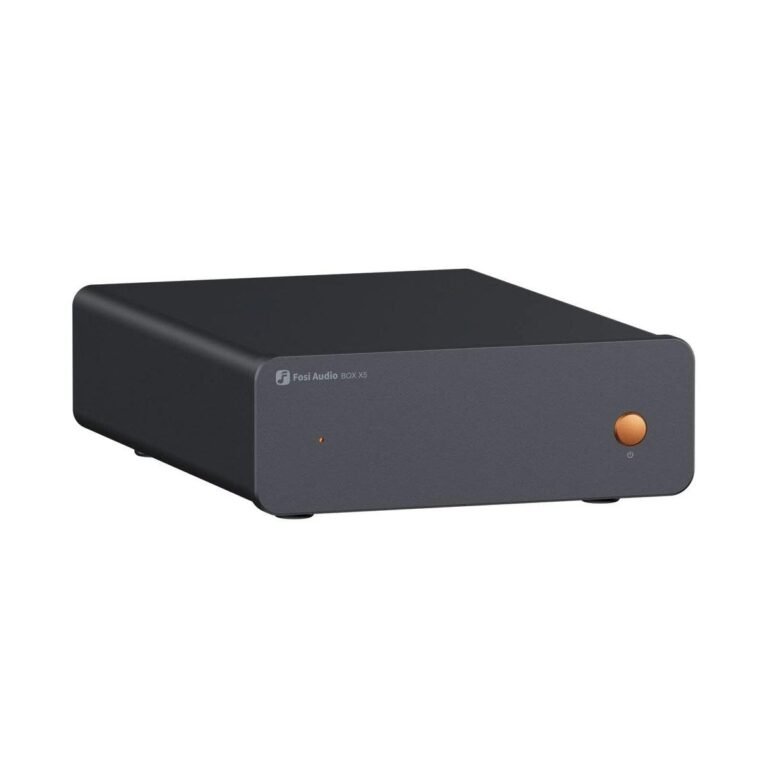
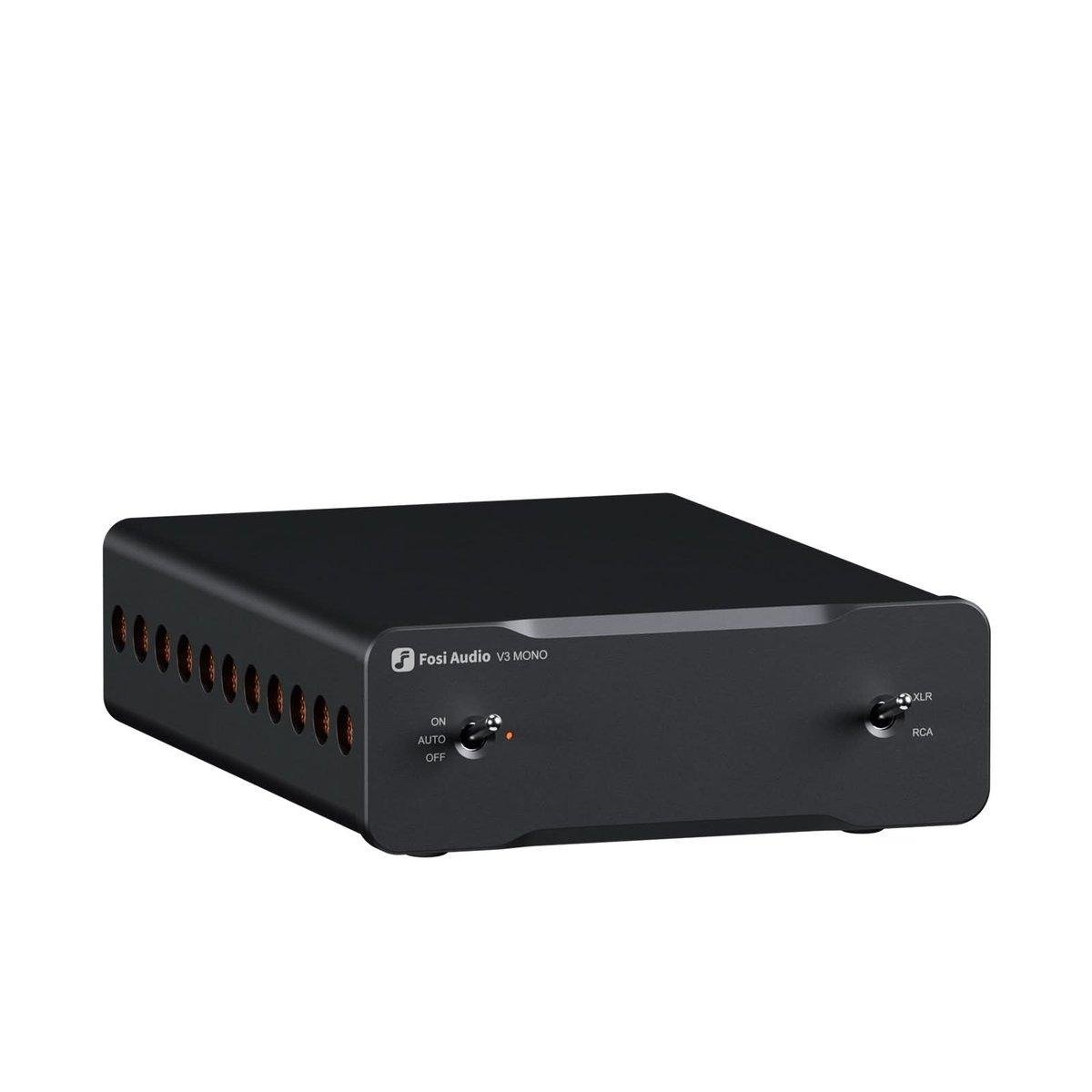

Home cinema asks a lot of an amplifier. Explosions, whispered dialogue and a full orchestral score can arrive within seconds of each other, and the front speakers carry most of that weight. A mono power amplifier, with one channel and one power supply per box, is a practical way to give those front speakers the clean, confident power they need, and it fits naturally into a home cinema that grows in stages.
Why the Front Speakers Deserve Their Own Amplifiers
In a surround system, the front left and right speakers do the heavy lifting. They reproduce music, effects and much of the score, while the centre channel handles dialogue and the surrounds add atmosphere. When the front speakers are underpowered, the whole soundstage suffers: effects lose impact and the music feels thin.
A pair of mono power amplifiers dedicated to the front speakers solves this directly. Each unit has its own power supply, so a sudden burst of sound on the left cannot starve the right. The front soundstage stays wide and stable, even during the most demanding scenes, while the surround receiver continues to power the remaining channels.
Bi-Amping With Mono Power Amplifiers
Some speakers offer two sets of terminals, one for the high frequencies and one for the low frequencies, which allows bi-amping. In a bi-amped setup, each section of the speaker gets its own amplifier, so the bass driver and the tweeter no longer share a single amplifier channel.
Mono power amplifiers suit bi-amping well, because each unit already handles one channel with a dedicated supply. Listeners who bi-amp often report tighter bass and clearer treble, since the amplifier driving the tweeter is no longer affected by the heavy current demands of the bass driver. Not every speaker supports bi-amping, so check the terminals on the back of your speakers before planning this route.
Connecting Mono Power Amplifiers to a Surround Receiver
Most surround receivers include preamplifier outputs, which send a line-level signal to an external amplifier. To add mono power amplifiers, connect the front left and right preamplifier outputs to the two units, and connect each unit to its speaker. The receiver continues to power the centre and surround channels, and its volume control still governs the whole system.
This staged approach is one of the strengths of the method. You can start with a receiver alone, add mono power amplifiers for the fronts when you are ready, and later extend the idea to the centre channel as well. Each step brings a clear improvement, and nothing you already own becomes redundant.
Heat, Space and Cable Runs
Mono power amplifiers generate heat, so give each unit space to breathe. Avoid stacking them inside a closed cabinet, and leave open space above each box. Place each amplifier close to its speaker, which keeps speaker cables short and reduces interference. The interconnect from the receiver can be longer without harm, so the amplifiers can sit near the speakers while the receiver stays in its usual place.
5 Steps to Add Mono Power Amplifiers to Your Home Cinema
- Check your receiver: confirm it has preamplifier outputs for the front channels.
- Choose matching units: buy the two mono power amplifiers as a pair.
- Place them near the speakers: short speaker cables preserve detail.
- Connect carefully: receiver outputs to the amplifiers, amplifiers to the speakers.
- Recalibrate: run your receiver’s room calibration again so levels are balanced.
Matching Power to Your Front Speakers
Check your speakers’ sensitivity and impedance before choosing. Efficient speakers need less power, while demanding speakers ask for more. The aim is comfortable headroom, so the amplifier delivers loud peaks without strain. A well-matched mono power amplifier will sound relaxed at normal listening levels, which is exactly how a home cinema should feel.
Balancing Cost Against Performance
Adding mono power amplifiers to a home cinema is not the cheapest upgrade, so it is worth weighing the cost against the benefit. A pair of units, plus the extra cables and shelf space, adds up. The question to ask is whether the front speakers are the part of the system holding everything back.
If the answer is yes, the investment is easy to justify, because the front speakers carry most of what you hear in a film. If the front speakers are already comfortable and the receiver has power to spare, the money may be better spent on a better centre speaker or on treating the room. Upgrades work best when they target the weakest part of the system, and that is not always the amplifier.
Frequently Asked Questions
Can I use mono power amplifiers with any surround receiver?
You can, provided the receiver has preamplifier outputs for the front channels. Check the back panel or the manual before buying.
Do mono power amplifiers improve dialogue clarity?
Indirectly, yes. When the front speakers are powered cleanly, the whole front soundstage opens up, which makes dialogue easier to follow against music and effects.
Is it worth adding mono power amplifiers to a small home cinema?
In a small room with efficient speakers, a good receiver may already be enough. The benefit is clearest in larger rooms or with demanding front speakers.
See also: StelsVPN Review 2026: Public Wi-Fi Protection for Freelancers and Small Teams
Final Thoughts
A mono power amplifier gives your front speakers what home cinema demands most: clean, dedicated power with a supply that serves only one channel and never shares its energy with another. Added to a surround receiver, a pair of them lifts the whole front soundstage, and because you can add them in stages, the upgrade fits a sensible budget. For film lovers building their system piece by piece, it is one of the most rewarding steps you can take.